Applied Wisdom

Daily Practices

Understanding principles is essential, but transformation comes through practice. These exercises, drawn from the New Thought masters, make the philosophy practical.

Morning Imagination Session

Morning Imagination Session

Beginner

Start your day by entering your desired state before the world enters your mind. This practice leverages the naturally receptive state of consciousness upon waking.

Duration: 10-15 minutes
Frequency: Daily, upon waking

How to Practice

  1. 1Remain still after waking—don't reach for your phone or get up immediately
  2. 2Choose one specific desire to focus on for this session
  3. 3Construct a short scene (10-20 seconds) that implies your wish is already fulfilled
  4. 4Enter the scene in first person—see through your own eyes, not as an observer
  5. 5Add sensory details: what do you see, hear, touch, smell?
  6. 6Focus on the feeling—the emotional tone of having your desire fulfilled
  7. 7Loop the scene 3-5 times until it feels natural and real
  8. 8Release the scene and rise, carrying the feeling with you into your day

Tips for Success

  • Keep your scene simple and short—complexity makes it harder to feel real
  • The feeling matters more than visual clarity
  • If your mind wanders, gently return to the scene without frustration
  • Don't try to figure out HOW your desire will manifest—just dwell in the end

SATS (State Akin To Sleep)

SATS (State Akin To Sleep)

Intermediate

Neville Goddard's signature technique for impressing desires on the subconscious mind. Uses the hypnagogic state—the threshold between waking and sleeping—when the mind is most receptive.

Duration: 15-20 minutes
Frequency: Nightly, at bedtime

How to Practice

  1. 1Prepare your scene during the day—know exactly what you'll imagine before bed
  2. 2Lie down in your normal sleep position with the intention of falling asleep in your scene
  3. 3Relax your body progressively from head to toe
  4. 4Let your mind quiet—don't try to force thoughts away, just let them settle
  5. 5Notice when you become drowsy—this is the hypnagogic state you want
  6. 6Enter your pre-constructed scene while in this drowsy state
  7. 7Feel the reality of the scene as you loop it gently
  8. 8Allow yourself to fall asleep while in the scene

Tips for Success

  • The goal is to fall asleep IN the scene—this impresses it on the subconscious
  • If you're too alert, focus on physical relaxation first
  • If you fall asleep too quickly, practice earlier in the evening initially
  • Consistency matters more than perfection—do this nightly for best results
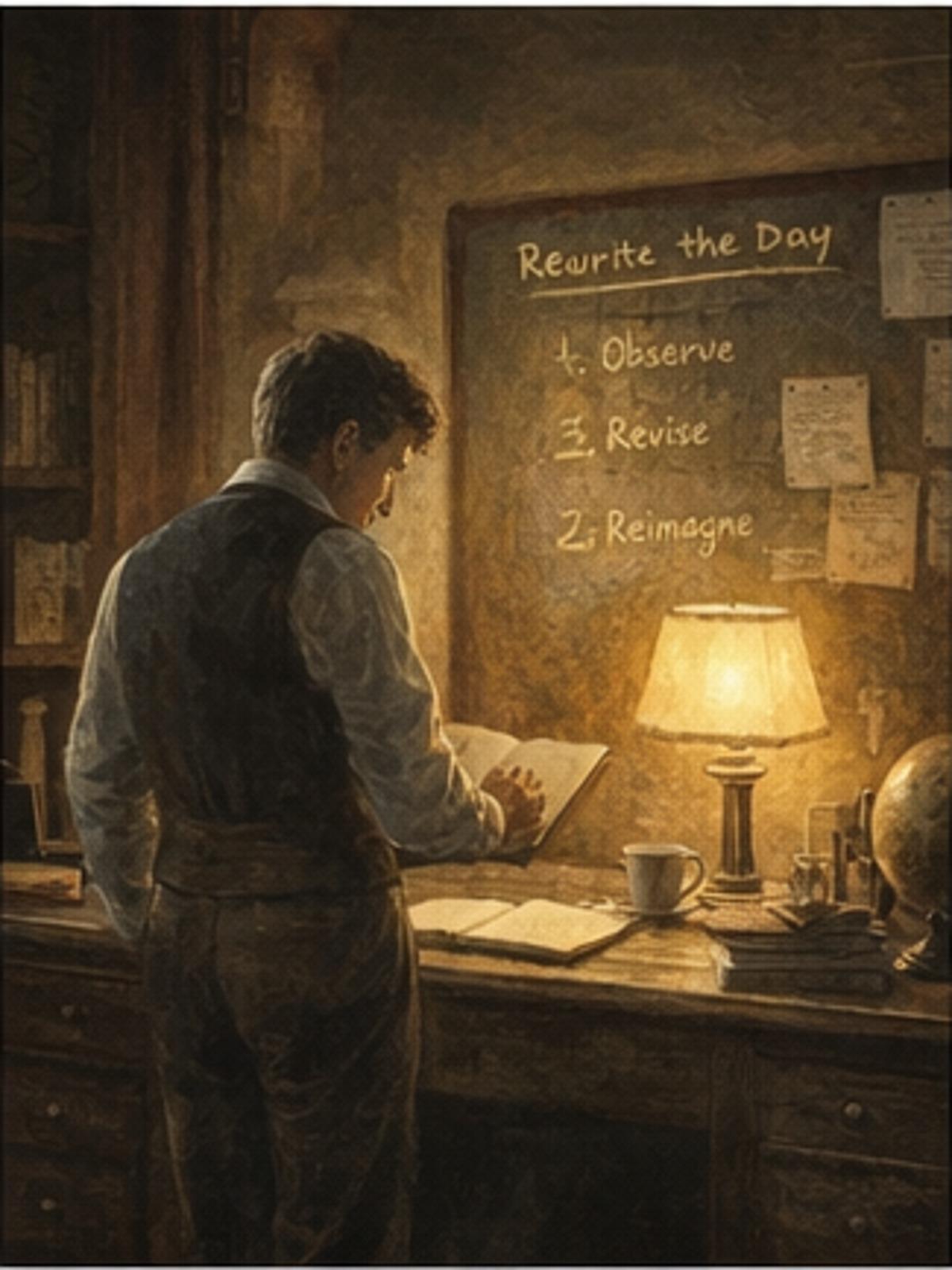
The Revision Technique

The Revision Technique

Beginner

Transform past negative experiences by reimagining them as you wish they had occurred. This breaks negative patterns and changes your relationship to memories.

Duration: 10-15 minutes
Frequency: Nightly, before SATS

How to Practice

  1. 1Review your day chronologically before sleep
  2. 2Identify any events that produced negative emotions—conflict, disappointment, embarrassment
  3. 3Select one event to revise thoroughly
  4. 4Replay the event in your imagination, but change it to how you wish it had happened
  5. 5Make the revision vivid—see, hear, and feel the improved version
  6. 6Loop the revised version until it feels more real than the original memory
  7. 7Move on to the next event or proceed to SATS

Tips for Success

  • You're not denying what happened—you're releasing its emotional charge
  • Revise even small annoyances; they compound over time
  • For major events, you may need to revise across multiple nights
  • The revision should feel satisfying, not forced
The Mental Diet

The Mental Diet

Advanced

Seven days of refusing to dwell on negative thoughts. This practice reveals the automatic nature of negative thinking and builds the muscle of mental redirection.

Duration: All waking hours
Frequency: 7 consecutive days (restart if you dwell on negativity)

How to Practice

  1. 1Commit to seven consecutive days without dwelling on negative thoughts
  2. 2Understand the rule: negative thoughts will arise (that's normal)—dwelling is the issue
  3. 3When a negative thought appears, acknowledge it briefly and redirect
  4. 4Ask yourself: "What would I be thinking if things were going well?" Think that instead.
  5. 5If you catch yourself dwelling for more than a few seconds, restart the seven days
  6. 6Track your progress—note what triggers you and how quickly you redirect
  7. 7After completing seven days, maintain the practice as ongoing mental hygiene

Tips for Success

  • Most people don't complete this on their first attempt—that's normal
  • The attempt itself builds awareness, even if you restart repeatedly
  • Include all forms of negativity: worry, criticism, resentment, self-pity, fear
  • Don't just suppress—redirect to something genuinely better
Assumption Testing

Assumption Testing

Beginner

Throughout the day, check in with your underlying assumptions about yourself and your life. This practice builds awareness of the background beliefs that shape your experience.

Duration: 2-3 minutes per check-in
Frequency: 3-4 times daily

How to Practice

  1. 1Set 3-4 reminders on your phone throughout the day
  2. 2At each reminder, pause whatever you're doing
  3. 3Ask: "What am I assuming right now about myself and my situation?"
  4. 4Notice the background assumptions beneath your conscious thoughts
  5. 5Identify any limiting assumptions you've caught yourself in
  6. 6Flip the assumption: "What would I assume if my desire were already fulfilled?"
  7. 7Dwell in the new assumption for 60-90 seconds before continuing your day

Tips for Success

  • Assumptions often hide in the background—they feel like "just how things are"
  • Pay attention to assumptions about your capabilities, worthiness, and possibilities
  • The goal is to catch yourself in limiting states and consciously choose better ones
  • Over time, the new assumptions will become your default

Where to Start

If you're new to these practices, we recommend this progression:

  1. 1
    Morning Imagination Session

    The gentlest introduction—10 minutes upon waking.

  2. 2
    Assumption Testing

    Quick check-ins throughout the day to notice your mental patterns.

  3. 3
    The Revision Technique

    A nightly practice that compounds over time.

Once these feel natural, add SATS and the Mental Diet for deeper transformation.

Understand The Why

These practices work because of deeper principles. Understanding why makes practice more effective.

Explore Core Principles